Past Events

Using Less to Make $More at Green Bay Packaging

May 15, 2013 – Timonium, MD. On Tuesday morning, over 30 manufacturing stakeholders attended RMI’s Breakfast Series and heard Green Bay Packaging’s General Manager Tyson Aschliman share insights on how his firm has increased productivity by going green.

TysonAschliman recalled a turning point for his firm occurred when a 2011 summer brown-out crippled the plant’s electronic drive systems. He used that event as an opportunity to revamp how they looked at energy. “That accident cost us over $100,000,” said Aschliman. “It was a big wake-up call, reminding us that energy is a big target cost area, directly tied to our profitability,” he said. “I never used to look at the energy bills before,” said Aschliman. “That has all changed now.”

In the fall of 2011, GBP joined an energy conservation initiative to be part of a self-directed green team program with a cohort group of five other manufacturers led by RMI. The program was operated under at U.S. Department of Energy grant through Baltimore County, Maryland to help manufacturers with their energy conservation needs.
“The timing of this initiative was great,” said Aschliman. “We reviewed our operating procedures and realized that we needed systems to help us tie our goals to improved productivity,” he said. Those productivity improvements also helped the firm save energy. As GPB went through this process, they found a lot of waste in the system.

“We stumbled into sustainability and profited,” he said. GBP made some modifications that required little or no costs, but reaped huge savings. In the first year, the company realized $40,000 in savings by conserving energy use and curbing their waste stream while increasing their productivity by 22%.

As the plant manager, he is quick to point that his commitment to being greener is not an altruistic effort. “I’m not interested in saving the planet, I’m interested in saving the plant”, he said. He also talked about the importance of culture change and getting folks committed to saving energy, recycling wastes and decreasing set-up times on the machines. “It all goes hand-in-hand,” he said. “As our employees become more incentivized to become more productive, our firm benefits, they benefit and our community benefits.”

Aschliman struck a chord with the manufacturers in the room as he explained how he views sustainability from a business perspective. “Sustainability to me means how to become more efficient in finding new markets and growing our business. As we do more with less, we are becoming a more profitable and a more responsible company,” Aschliman emphasized. “Bottom line: we are becoming more ecologically sustainable by ensuring our economic sustainability,” he said.

Insights from Re-Shoring Manufacturing Business to Maryland

Dale WilliamsApril 10, 2013, Timonium, MD - Over 35 manufacturing stakeholders attended a Regional Manufacturing Institute (RMI) Breakfast Series event in Timonium to hear from one of the first Maryland companies to buck the outsourcing trend by bringing some of its overseas operations to the State.

Dale Williams, Chief Operating Officer of Chesapeake Bay Candle, recounted the unique story about why Chesapeake Bay Candle brought some of their manufacturing business from Asia to open a new facility in the U.S. in June, 2011. According to Williams, at the start of 2008, Chesapeake Bay Candle found itself at an interesting crossroads. The home-grown Maryland candle business started in 1994 in Annapolis by Co-Founders Mei Xu, and her husband, David Wang. From humble beginnings of developing candles in their basement out of soup cans, they expanded rapidly and eventually were importing candles from their own China and Vietnam manufacturing facilities to meet the demand from U.S. clients.

They wanted to make sure they were managing the business effectively so in early 2008 they hired an outside manufacturing veteran to help them expand their business. “When I joined the business, things really looked good, but then came the great recession later that fall,” said Williams. The firm needed to take a hard look at the business as they realized their major niche was making one product really well from factories based overseas for the U.S. market. “We were very vulnerable to events that could impact us beyond our control,” said Williams. Years earlier, the company had been forced to expand manufacturing into Viet Nam when the U.S. Department of Commerce imposed 110% duty on China candle imports.

As Chesapeake Bay Candle moved most of its candle manufacturing to Vietnam, they discovered that their new manufacturing location didn’t insulate them from external shocks. As manufacturers continued to flee China for the lower labor in Vietnam, prices for Vietnamese labor skyrocketed by 46%. “We had to take a hard look at the full cost of our product imports throughout the whole supply chain,” said Williams. They looked at labor, freight, lead time, compliance costs and third party testing. “All of these prices were going up,” he said. Chesapeake Bay Candle was in the fashion business with fragrance as the centerpiece. “We had lots of design work, lots of SKUs and working capital tied up in inventory for as long as five months,” he said. Meanwhile, clients like Target and Bloomingdales wanted more candles and they wanted them cheaper and faster.

The evaluation process helped the company project trends in the industry and prepare to respond to them. “We wanted to have enough self-awareness to understand why people buy from us,” said Williams. In conversations with customers, the company recognized that clients valued Chesapeake Candle for its fashion leadership and prolific product design capability. It had become an industry force for it ability to both forecast and interpret trends and also provide good customer service. They also realized the fading labor benefit from its overseas production and the continued impact of higher transportation and inventory cost. They began to evaluate the benefit of producing product closer to their U.S. clients.

Once the decision was made to explore setting up a facility in the U.S., they needed to evaluate the best location for their business. “We looked at several states and alternative locations and then realized that we wanted to be in Maryland where we were headquartered,” said Williams. They decided that an existing building facility in Glen Burnie would provide the ideal location and set out to create process layouts, engineering requirements and purchase the necessary equipment needed to set up operation.

“We learned some hard lessons in setting up a manufacturing operation in Maryland,” said Williams. The amount of regulations and permitting requirements were very complex. “It took twice as long and ended up being twice as expensive to establish our operations due to the myriad of code requirements, hazmat and fire control retrofits,” he said.

“While we have enjoyed very good productivity from our Maryland plant, we don’t want other manufacturers to have to go through the learning curve of what we experienced,” said Williams. He encouraged the State of Maryland to do a better job of developing closer cooperation between the State and counties related to permitting hurdles faced by manufacturers. “The process was very discouraging. Nobody had the answers,” he said. I can’t imagine too many other companies putting up with what we experienced,” he said.

Williams said that Maryland could attract more manufacturers to set up operations in the State by providing “how to guidelines” for setting up facilities in the state and establish a concierge service of “knowledgeable officials” to help companies get through the process. Chesapeake Bay Candle had to hire a myriad of service providers to comply with codes that weren’t well understood by the enforcement agencies or by their hired expert consultants.

“At the end of the day, we made the right decision,” he said. Despite the arduous regulatory process since opening the facility in June 2011, the firm has been able to double their shifts and double their production capability.

RMI Breakfast Series
April 23: How GM is Embracing Robotics

All sponsors April 2

Breakfast Sponsors

Coming April 23, 2013 – The RMI Breakfast Series:
How Robotics is Increasing Manufacturing Efficiency at GMREGISTER TODAY! 

Join RMI and top manufacturing thought-leaders for RMI’s Breakfast Series on April 23 Featuring GM Baltimore Operations General Manager Bill Tiger as he discusses the benefits of embracing robots as part of their new plant’s assembly process.

i-JcKssqJ-XL.jpgAmerican firms that have brought robots in to their facilities are benefiting from increased productivity, falling worker’s compensation rates and savings on premiums
translating into more resources for staff and other critical needs.

GM Baltimore Operations recently added robots to its assembly line for its new eMotor Building.

If you wish to get the RMI member rate of $25.00 for this and future events, you must complete an RMI 2013-14 member application. Complete the application here. If you are not a paid RMI member your fee for this event is $50.00 . Thank you.

Register Here

RMI Chairman Bullish on American Manufacturing

Timonium, Maryland- February 26. On Tuesday, RMI Chairman Drew Greenblatt, President of Baltimore-based Marlin Steel Wire Products, joined National Manufacturing Association (NAM) Chief Economist Chad Moutray to speak at an RMI breakfast event on the topic of “America’s Economic Recovery and What it Means for Manufacturing” at the Timonium Crown Plaza Hotel. Over 60 manufacturers and manufacturing stakeholders attended the event.

Greenblatt emphasized why he is bullish on American manufacturing. He cited several reasons why American manufacturing is having a renaissance including the “re-shoring” of American manufacturing. He also pointed out that China is losing its luster as a top investment location for America’s manufacturers citing labor costs skyrocketing by 20 % annually and the continued inattention to the rule of law. “U.S. manufacturers are weighing the options and many are realizing it is become a more profitable option to either re-shore or to not move their operations overseas at all,” he said.

Additionally, Greenblatt emphasized some key reasons why American’s manufacturing is on the cusp of a renaissance including American’s cheaper energy reserves, the impact of skyrocketing freight costs; and the need to service clients requiring speed-to-market. “Manufacturing jobs are great jobs. They pay $77,000 per year and include benefits. We need those jobs to broaden our US middle class and end the recession.”

NAM’s Moutray painted a mixed picture for 2013, citing the headwinds from Washington’s inability to address the country’s deficit problems and other headwinds from Europe; he highlighted the strengths in the economy as positives for manufacturing including a housing recovery, modest consumer consumption and increased exports. While only four out of 10 of America’s top exporting markets had a positive growth trends last October, he said today “8 out of 10 markets are growing” and that’s good for our economy. Further he said the U.S. had 5.5% increase in exports last year and predicts that we should do much better in 2013.

“Clearly there are signs that manufacturing, with good paying jobs with benefits, is making a comeback, said Mike Galiazzo, President of RMI. “Manufacturing innovation, technology and re-shoring are rebuilding our middle class today,” he said.

RMI Features List of Made in Maryland Products as “Gifts for the Holidays”

Manufacturers, makers, crafters may list companies and products at no cost.

We have listed companies on the RMI website and encourage you to buy local “Gifts for the Holidays” from Maryland  companies listed

Click here to see the list

RMI’s Upcoming Meetings and Events

Fall Finishes

Oct 16-18:

RM Board Chair Drew Greenblatt + Mike Galiazzo to spoke  at National Next Generation Manufacturing Summit in Pasadena CA.  Invitation only. Senior level representatives of the following companies are attending: Avon, Boston Scientific, Chemtura, Chiquita, Cinram, CM Packaging, Coach, Coca-Cola, Commscope, Conagra Foods, Cummins, Dean Foods, Department of Commerce-NIST, Dole, Dreyer’s/Nestle, DuPont, E&J Gallo Winery, Energizer, General Dynamics, Godiva Chocolatier, Honeywell, Johnson & Johnson, Jarden Corporation, Kellogg, Lenovo, Medtronic, Merc, Monster Energy, Motorola Mobility, Nissan Americas, Pepsico, Pinnacle Foods, Praxair , Proctor & Gamble, Raytheon, Remington Arms, Reynolds America, Starbucks, Steelcase, Stryker, TATA Steel, Tiffany and Co, Toshiba America,Vela Gear Systems,VeriFone and Whirlpool.

Oct 12:  Over 70 people attended!

Rapid Tech Leaders + Learners – How manufacturers are using 3D printers + rapid technologies.

Rapid technologies, like additive manufacturing, are in the news and we are helping manufacturers learn more how this technology is changing the world of work.

3 great speakers!  

Ryan Sybrant, Director of Business Development for Direct Digital Manufacturing, Stratasys: Case Studies of three manufacturing companies that have used Additive Manufacturing to reduce costs and time to market.

John Danko , Owner, Danko Arlington, A Maryland Miracle: Sand Casting with Additive Manufacturing.

Rick Moore, Branch Chief, U.S. Army:  How the US Army uses 3D Scanning and Additive Manufacturing.

Sept 11: Dr. Mike Galiazzo speaks at STEM Conference hosted by the Patuxent Policy Group and St. Mary’s College, on September 11th. Other speakers include: University of Maryland Chancellor Dr. Brit Kirwan, University System of Maryland, Mr. Gary Kessler, Deputy Commander, Naval Air Warfare Center Aircraft Division, Dr. Danette Gerald Howard, Secretary, Maryland Higher Education Commission, Dr. David Stevens, Director and Professor, The Jacob France Institute, University of Baltimore and, Dr. David Wilson, President, Morgan State University , and others.

Sept 15: RMI on the road with Start Up Maryland’s  “Pitch Across Maryland”  bus tour stop at PRS Guitars.  Mike Galiazzo and RMI Board member, Julie Lenzer Kirk will be with Mike Binko, for the Pitch Across Maryland bus stop at the 2012 Experience PRS. Cohosted by Lenser Kirk and Binko, startup Maryland Pitch Across Maryland is for entrepreneurs to get on the bus to make their pitch for their business. Entrepreneurs are invited to show off their business in the Pitch Across Maryland contest. We’ll video tape startups giving their business pitches at more than 20 Tour Stop locations. MORE

2012 Mid-Atlantic Lean Conference A Big Success!

Jeff Fuchs and the MWCC are winners with this exceptional event and outcomes. Great program, speakers, exhibits and attendance. – Mike Galiazzo

Lean is the most significant way for private and public organizations to get better results. Lean grew out of the manufacturing sector but today it is applied in other sectors like education, government and health.

The Maryland World Class Consortia is hosting the Mid-Atlantic Lean Conference November 7 & 8, in Baltimore County with thirty-two concurrent presentations by lean experts and practitioners who will share lean success stories, lessons learned, and tools every organization can use right now to improve performance. This is a high value program offered at a great price. RMI is a sponsor and [Read more...]

Lead Obama Energy Advanced Manufacturing Official to Review RMI Green Team Model

Hunt Valley, Maryland, May 24. Dr. Leo Christodoulou, the head of the U.S. Department of Energy’s (DOE) Advanced Manufacturing Office will be the opening keynote speaker at RMI’s NEXT-Gen Energy Manufacturing Forum on June 6 in Timonium, Maryland.

The forum will provide Dr. Christodoulou an opportunity to review the results emanating from RMI’s Self Directed Green Team (SDGT) approach for energy conservation through employee engagement in manufacturing. Dr. Christodoulou will hear from six Baltimore County manufacturing companies who participated in the U.S. DOE-funded SDGT initiative featuring executives from GM Baltimore Operations, MarquipWardUnited, Acadia Windows & Doors, Green Bay Packaging, Lion Brothers and Kirk-Habicht Company. [Read more...]

NextGEN-M Event Rapid Technologies for Make + Manufacture

SEE A MAP OF ATTENDEES AND CONSTELLATION OF RAPID TECH LEADERS + LEARNERS

Agenda + Speakers List Below

NEXTgen-M is a Baltimore first.

If you are interested in rapid technologies and smart manufacturing this event is for you. We are bringing together manufacturers, entrepreneurs, educators, techies and all who see a future for rapid tech in the Baltimore region.

You will learn how rapid tech is being applied in industries to include, manufacturing, forensic, medical, and military. Technologies include 3D imaging, modeling, 3D printing (additive manufacturing), laser cutting and CNC milling (subtractive manufacturing). [Read more...]

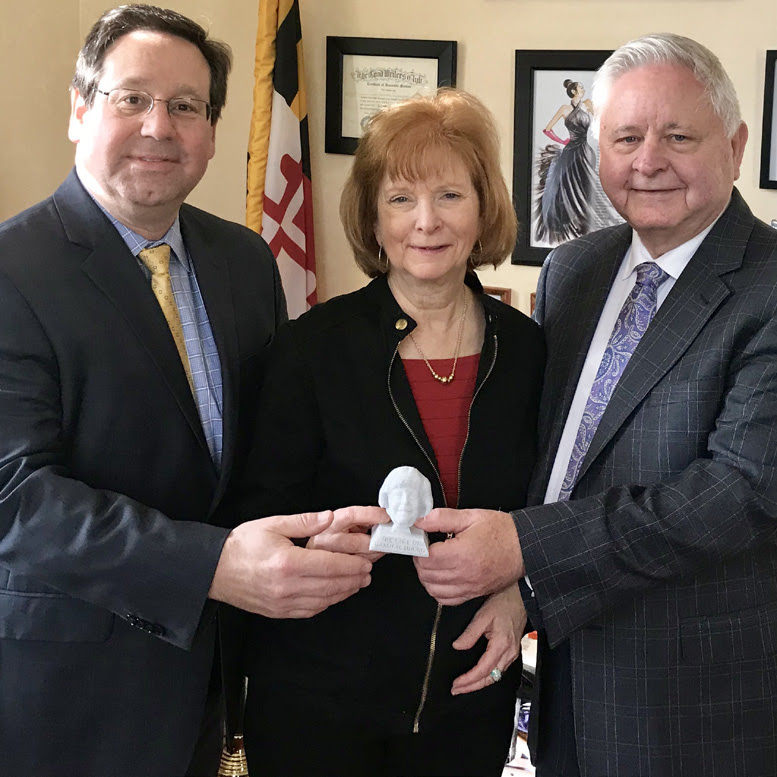
2011 Person of the Year: Aris Melissaratos

Last night, nearly 300 of Maryland’s business leaders and lawmakers gathered for Corridor Inc.’s Sixth Annual Person of the Year Awards, held at the brand new Hotel at Arundel Preserve. What began in December with 21 accomplished and worthy nominees was narrowed down by reader votes to one person: Aris Melissaratos, Senior Advisor to the President for Enterprise Development at Johns Hopkins University.

When Aris Melissaratos first arrived in Maryland, he was 13 years old and spoke not a word of English. His parents had brought him to the United States as they escaped communism and economic hardship. Now, Melissaratos is known throughout Maryland and the region for his entrepreneurship, work ethic, community involvement, and leadership.

In 2007, Melissaratos joined Johns Hopkins University as Senior Advisor to the President for Enterprise Development, bringing his career full-circle since receiving his Bachelor of Science degree in electrical engineering from Hopkins in 1966. After graduation, Melissaratos began his 32-year career at Westinghouse Electronics Corporation, where he held numerous positions in Baltimore and at the company’s corporate headquarters in Pittsburgh.

By 1980, Melissaratos had earned a master’s degree in engineering management from George Washington University and completed a management development program at Harvard Business School. When he left Westinghouse in 1998, he had served as both the company’s Vice President of Science and Technology and its Chief Technology Officer.

Beginning in 2003, Melissaratos served a four-year term as Secretary of Maryland’s Department of Business and Economic Development (DBED). As DBED Secretary, his mission was to stimulate the state’s economy, promoting it as a prime destination for tourists, artists, and film producers. Melissaratos is also credited with developing technology and manufacturing in Maryland, as well as minority businesses.

In his current position at Hopkins, Melissaratos is responsible for building the university’s relationship with businesses and forging new connections with the research and corporate communities. He also oversees the Johns Hopkins Technology Transfer, which links Hopkins researchers with businesses interested in commercializing their inventions.

Read More: 2011 Person of the Year: Aris Melissaratos [Corridor INC]